
Dry January, Group Chats and the Rise of THC Beverages
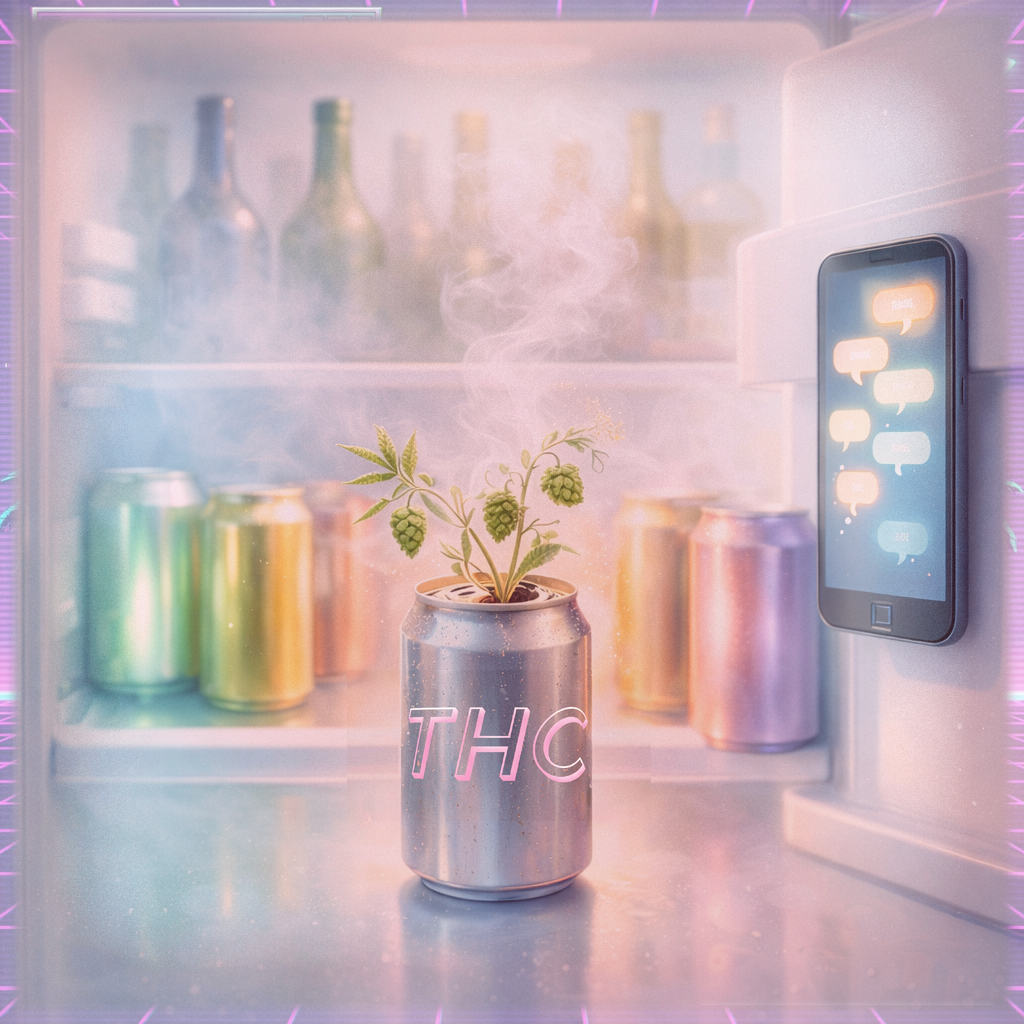
THC beverages are turning Dry January experiments into year-round habits as drinkers rethink alcohol, retailers adapt and new hemp rules reshape the market.
Every January, the group chats light up with the same question: “You doing Dry January this year or just ‘damp’ again?” A few years ago, that meant people rotating between club soda, NA beer and sheer willpower.
Now it means opening a fridge in Phoenix, Denver or Minneapolis and seeing something different on the shelf next to the hard seltzers: slim cans of low-dose THC beverages sitting where a bottle of wine used to live.
Dry January has turned into a reliable trial month for these drinks. Denver-based High Spirits saw its direct-to-consumer sales climb about 10% in January, while its retail partners ordered roughly 50% more product in November to get ahead of the resolution rush. Louisiana’s Crescent Canna reported a 50% year-over-year sales jump between 2024 and 2025, and almost 1,000 people opted into its Dry January promotion, about five times the previous year. Those are serious numbers for a category that used to be more curiosity than habit.
Retailers are seeing the follow-through. Top Ten Liquors in Minneapolis reported a 30% increase in THC beverage sales in 2025 compared with 2024. A Nashville beverage store said THC drinks hold steady at about 7% of total sales, not just in January but month after month. The story that emerges is straightforward: people try these drinks when they hit reset on alcohol, and a meaningful share keep buying them once the calendar turns.
At the same time, Gallup polling shows the percentage of U.S. adults who drink alcohol sitting at a record low of 54 percent, with growing concern about health impacts even at “moderate” levels. A peer-reviewed survey of 438 adults found that most respondents reported cutting their alcohol use after they started drinking cannabis beverages, with reported weekly drinks falling from a little over seven to a little more than three. The science is early and self-reported, yet the direction matches what retailers and brands say they see every day.
All of this plays out against an unstable policy backdrop. Whitney Economics estimated that legal THC beverage sales reached $1 billion to $1.3 billion in 2024, helped by hemp-derived products on regular store shelves in 28 states. That momentum now runs into a new federal definition of hemp that will cap hemp THC per container starting in late 2026. For a community that finally sees cannabis options blending into everyday life, it feels like progress and uncertainty arriving at the same time.
From where we sit at CIGAWEEDS, that tension is exactly the story: THC beverages using Dry January as an on-ramp to the mainstream, while consumers, brands and regulators all try to figure out what responsible, accessible cannabis drinking should look like.
The January Spike Starts in November
On paper, Dry January is a one-month event. On store shelves, it starts weeks earlier.
High Spirits told MJBizDaily that its retail customers ordered about 50% more product in November compared with typical months, largely to prepare for January demand. The brand still felt the impact on its own site when January hit, with a 10% lift in direct-to-consumer sales. Crescent Canna described a similar pattern: a big run-up tied to Dry January, a strong promotional response, and then a larger base of customers than the year before.
Retail buyers are not guessing. If a category has not earned its space, it gets replaced before New Year’s Eve. The fact that stores are investing in THC beverages before the holiday season, then riding that inventory into January, signals that they see something sticky in the way shoppers talk about and try these drinks. A resolution month that used to revolve around nonalcoholic beer now includes terpene-forward seltzers and hemp-derived tonics.
Arizona’s rules keep most THC beverages inside the licensed cannabis system rather than on supermarket shelves, which creates a different rhythm. Even so, CIGAWEEDS hears from dispensary managers who plan January and February menus with “sober-curious” shoppers in mind. They make sure the drink fridge looks inviting to people who might be stepping into a dispensary for the first time precisely because they want a different relationship with alcohol, not because they suddenly became interested in concentrates.
Dry January becomes the excuse. The real decision happens earlier, when buyers commit to stocking those cans in the first place.
Dry Month, New Rituals
The more interesting question is what happens in March.
Retailers in Minnesota and Tennessee told MJBizDaily that THC beverage sales did not collapse once people stopped posting about resolutions. Top Ten Liquors logged a 30% year-over-year gain for the category in 2025, while a Nashville beverage store said THC drinks hold a roughly stable 7% share of its total sales. That is not a fad curve. It looks more like people building new rituals.
For many consumers, the switch is practical. A 5-milligram drink requires no grinder, no rolling tray and no outdoor smoke break. It fits into a tailgate cooler, a movie night or a backyard barbecue without changing the social script too much. Friends can still “have a drink together,” just with a different active ingredient and, ideally, more attention to dose and pacing.
In Arizona, that is especially visible at private events. Hosts who keep a cooler stocked with traditional beer now slot in chilled cans from the dispensary as an option for guests who prefer cannabis or want to mix one THC drink into an evening instead of another round of cocktails. That kind of hybrid hospitality reflects a maturing cannabis culture, where products are chosen based on effect, setting and harm-reduction goals rather than just legality or novelty.
THC beverages occupy that middle space: not as discreet as a gummy, not as intense as a dab, and socially familiar enough that even someone new to cannabis can understand how to hold one.
Alcohol Habits Are Shifting, Not Disappearing
None of this means everyone suddenly stopped drinking. It does mean people are reconsidering why, when and how much they drink.
Gallup’s 2025 polling found that the share of U.S. adults who describe themselves as drinkers has dropped to 54 percent, the lowest point the organization has recorded. The Associated Press noted that more Americans now say moderate alcohol use is harmful, a big shift from the days when “a glass of red wine” was casually framed as good for the heart. Concerns about cancer risk, mental health and sleep quality are pushing people to rethink their defaults.
THC beverages slot into that rethink in a specific way. They do not demand abstinence. They offer an experiment: swap a cocktail for a cannabis drink at happy hour, see how your body responds, and decide what to do next. Some people discover that they enjoy the effect and cut back on alcohol. Others decide they prefer booze, or they alternate between the two. Either way, the presence of familiar-looking cans lowers the barrier between “I am curious about weed” and “I am actually going to try a cannabis product.”
That dynamic is showing up across the cannabis culture in Arizona. Budtenders talk about it when they guide shoppers away from chasing the highest THC percentage and toward products that fit a lifestyle, whether that means one beer plus one 2.5-milligram drink or a night out with no alcohol at all.
What the Early Science Says (and Does Not Say)
Researchers are starting to test whether the substitution story holds up beyond anecdotes and sales charts.
A recent study, summarized by the University at Buffalo and published in the Journal of Psychoactive Drugs, surveyed 438 adults who reported using cannabis beverages. About 62.6% said they reduced or stopped drinking alcohol after they began using these products. On average, participants reported that their weekly alcohol intake dropped from 7.02 drinks to 3.35.
Those numbers are promising, especially for people who want tools that support drinking less without forcing an all-or-nothing decision. The caveats are important, though. Participants volunteered for the survey, which means they might be more engaged or motivated than the general population. The study relied on self-reported behavior rather than verified medical records. It did not follow people over many years. It cannot prove that THC beverages caused the decrease in alcohol use; it only shows that the two changed together for this group.
Public-health researchers who spoke about the findings stressed that future work needs to track people over time and examine how cannabis beverages interact with other substances, including continued alcohol use. They also raised questions about labeling, dose consistency and the risk that some consumers might mix drinks rather than substitute them.
Arizona’s cannabis community has a role to play in answering those questions responsibly. Brands, retailers and consumers can treat THC beverages as part of a harm-reduction toolkit while still acknowledging that any intoxicant carries risk.
A Real Market, Living Under a Moving Target
For people on the business side of cannabis culture, this category is no longer a side hustle.
Whitney Economics estimated that legal THC beverage sales reached between $1 billion and $1.3 billion in 2024, with a detailed breakdown that showed hemp-derived drinks being sold at regular retail in 28 states. That kind of footprint goes far beyond dispensary coolers. It pulls corner liquor stores, grocery chains and independent cafes into the cannabis conversation, often in states that still do not have adult-use marijuana laws.
Those same hemp channels face a major reset. In November 2025, Congress approved changes to the federal definition of hemp that set a 0.4-milligram THC-per-container limit for final hemp-derived cannabinoid products sold outside state-licensed cannabis systems. The Congressional Research Service explained that the new standard will take effect on Nov. 12, 2026, giving companies a year to align formulas, packaging and distribution.
For many existing THC beverages, which often deliver several milligrams of THC per can, a 0.4-milligram ceiling would transform the experience or force brands to move entirely into state-regulated dispensary channels. Reuters reported that alcohol industry players are watching closely, partly because these drinks nibble at their market share and partly because the rules will influence how much crossover is possible between liquor distribution and cannabis products.
Texas Tribune coverage illustrated what is at stake in states where hemp-derived THC filled a gap in the absence of regulated marijuana. Retailers there face the possibility that a profitable, popular category could simply vanish from their shelves once the federal changes kick in, unless state lawmakers craft specific protections or transitions.
Where Arizona and CIGAWEEDS Fit In
Arizona does not sit at the center of the hemp THC fight in the same way as Texas or Tennessee. The state already has a regulated adult-use cannabis system with clear rules around dosing, testing and packaging. That reality changes the opportunity set for THC beverages.
If federal rules squeeze high-dose hemp drinks out of gas stations and liquor stores, many of those brands will look toward dispensary networks and vertically integrated operators to reach consumers who still want that experience. Arizona’s licensed market, including community-focused brands like CIGAWEEDS, can offer something the hemp side cannot: a clearer compliance framework, established lab testing and a consumer base already familiar with buying cannabis through legal channels.
There is a responsibility that comes with that opportunity. Dosing needs to be intuitive. Labels need to be legible, not a math problem. Budtenders need to feel comfortable asking questions about alcohol use, medication interactions and tolerance. Community events that feature THC beverages should be honest about impairment, transportation and safe mixing with alcohol, not just treat cans as a clever party prop.
The cigablog premise is simple. Cannabis culture is a community project, not just a product list. THC beverages give people a new way to participate, from the friend who “never liked smoking” to the parent who wants one drink at a backyard cookout without paying for it the next morning. How we talk about these products, in Arizona and beyond, will help decide whether they become a thoughtful tool in the harm-reduction kit or just another trendy can at the register.
What to Watch After the Resolutions Fade
Dry January will come and go every year, complete with hashtags and half-finished challenges. THC beverages are likely to stay.
The next year or two will bring answers to some key questions. Spring and summer sales will show whether the category grows steadily or flattens out once the novelty wears off. Retailers will decide how much cooler space to dedicate to cannabis options as federal hemp rules tighten. Health researchers will continue to test whether people using these drinks truly experience fewer alcohol-related harms over time.
For Arizona specifically, lawmakers and regulators will have to decide how to treat low-dose drinks that blur the line between traditional beverage culture and cannabis. If they get it right, consumers will have more safe, clearly labeled options and fewer reasons to gamble on gray-market products that may not match their labels.
Until then, Dry January will keep functioning as an annual reset button and recruitment drive. People reach for something different, often for the first time. Some put the can down at the end of the month. Others add THC beverages to the mix permanently. The industry, and the communities that shape it, will need to be ready for both
***
Cigaweeds is the ultimate choice for discreet and convenient cannabis prerolls. Made with premium flower and natural hemp tips, our prerolls deliver a smooth and satisfying smoke every time. Whether you prefer indica, sativa, or hybrid strains, we have something for you. Our products are lab-tested and compliant with state regulations, ensuring quality and safety. You can find our prerolls at select retailers across Arizona, or order online and get them delivered to your door. Cigaweeds also collaborates with High Grade, a leading cultivator of exotic and rare cannabis strains, to bring you exclusive and limited-edition prerolls that will blow your mind.
Visit our website to learn more about our strains, our blog, and our store.
Follow us on Instagram to stay updated on the latest news and promotions.